





The hardest part of a check-in isn't the honesty. It's the word. Sometimes a child says "fine" because they haven't found another word yet. A simple question can help them get started. A good prompt is a door. It gives them a way in.
Here are prompts teachers can use, grouped by age. They work out loud, on the wall or in a Topic check-in. None of them is a test. Ask one, then listen.
For the youngest (about four to seven)
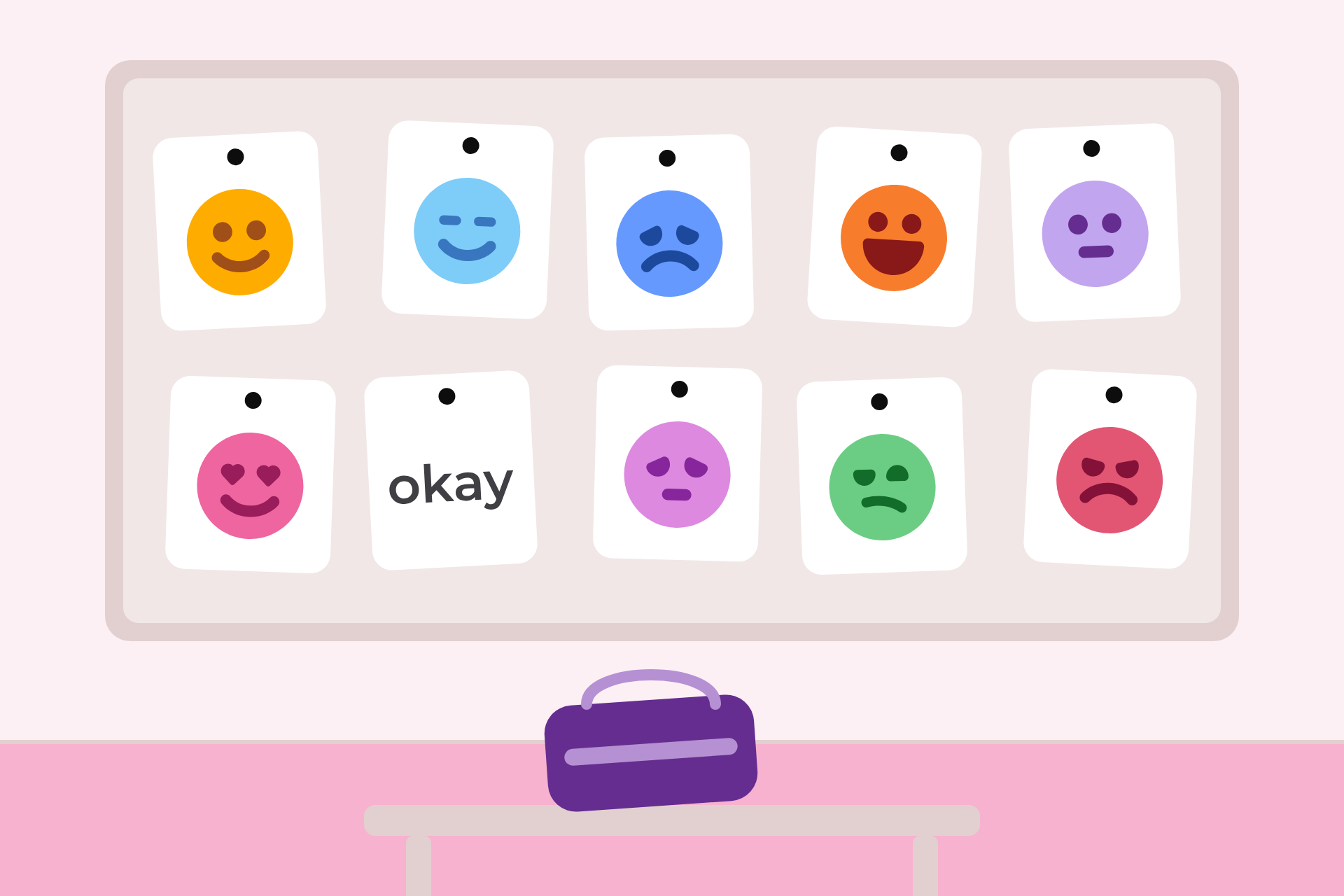
- Which face is yours today?
- Is it a big feeling or a small feeling?
- Where in your body do you feel it? Your tummy, your head, your hands?
- If your feeling were a colour, what colour would it be?
- What happened just before you felt it?
Keep it to one question, and accept a point or a nod as an answer. At this age the naming is the work. The explaining can wait.
For eight to eleven
- What's one word for how you feel right now?
- Is it about today, or has it been around for a while?
- If this feeling were weather, what would it be?
- What would make the next hour a bit better?
- Who did you spend break with, and how did that go?
At this age the words are often what's missing, not the feeling. "Frustrated", "nervous", "left out" and "proud" are all more useful than "bad" and "good".
For twelve and up
- What's underneath the first word?
- Is there anything you'd like me to understand about that feeling?
- What do you want someone to know, and what do you want to keep to yourself?
- On a hard day, what's one thing that usually helps?
- What are you looking forward to, even a little?
Older students want precision and privacy in equal measure. The third prompt matters: it tells them the choice of what to share is theirs.
Prompts for a Topic check-in
A Topic check-in is a check-in a teacher asks about a specific moment, a test week, a school event, a change in the class. The question does the work, so make it concrete.
- In one word, how are you feeling about Friday's test?
- How is the new seating plan working for you?
- What's on your mind about sports day?
- What's one thing you're proud of this term?
- What would make next week better than this one?
What to do with the answer
Thank them. Don't fix it straight away. Say the feeling back to them in their own word, and ask what would help. If something a child says needs an adult's help, follow your school's usual steps.
What to avoid
Asking "why" in front of the class. Prompts that pry into home life. Turning the answers into a chart on the wall. Treating "I don't know" as a failure. It's a real answer, and "okay" is a real feeling.
Keep them to hand
For more questions to keep to hand, download our Conversation starters printable. If you'd like to see how a student checks in, try it out on our homepage, two minutes and no sign-up.