


An emotional check-in is a short, regular moment when a student says how they feel and someone who cares about them finds out. That's all it is. It can be a word at the door, a card on a desk, or a minute on a device. This guide covers what a check-in is and isn't, how often to do it, and what to do with what you learn.
What a check-in is
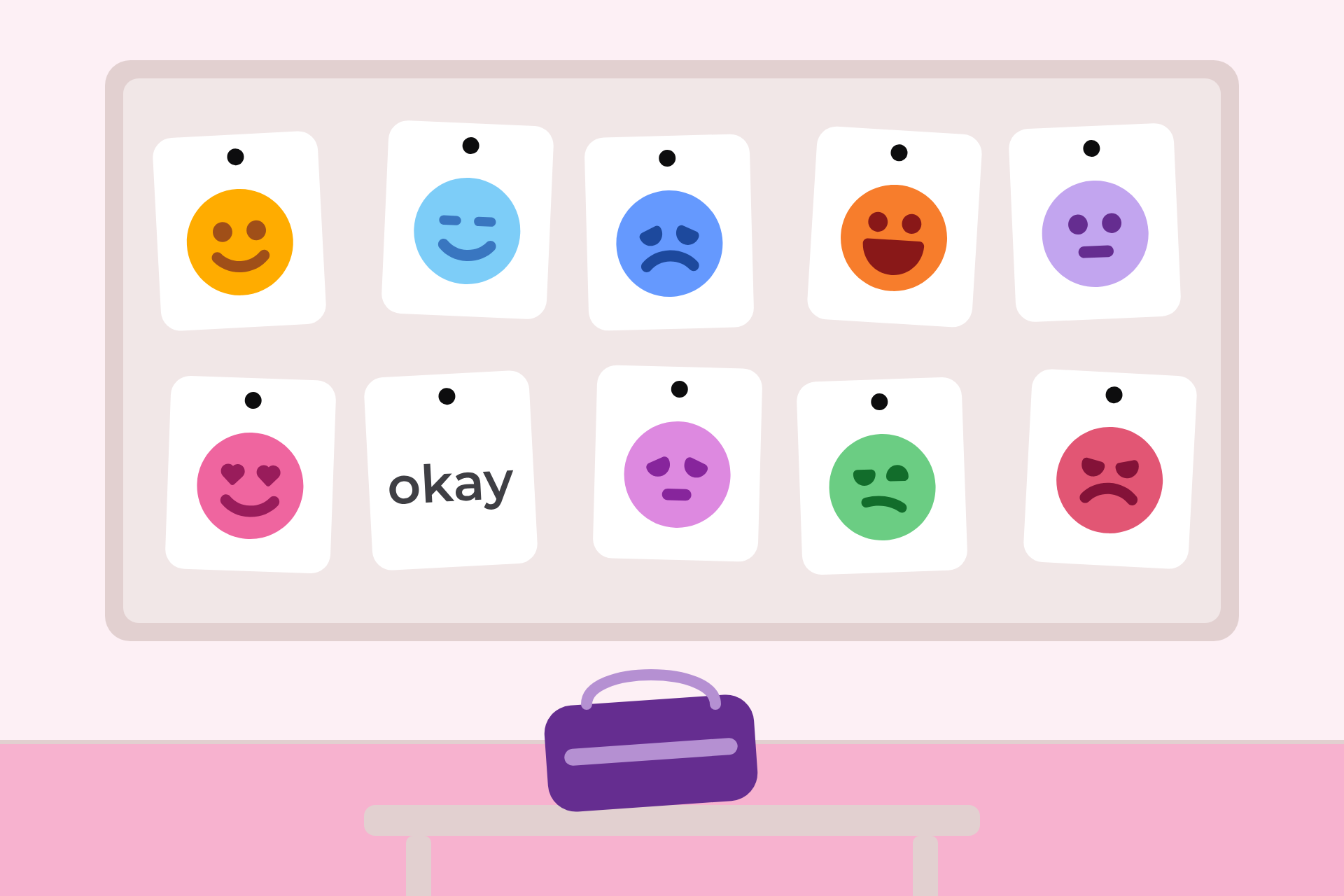
A check-in has three parts: a feeling the student names, a few words if they want to add them, and an adult who sees it. In YouHue a student picks a mood and adds words if they like. They share it with their teacher in under a minute. The youngest classes pick a face and tap why.
The naming is the heart of it. A feeling that has a name is easier to carry and easier to talk about. It's also easier for an adult to respond to. Doing it every day is practice at a skill, not a test of one.
What a check-in isn't
It isn't a survey. A survey asks a group a set of questions once a term or once a year and reports an average. A check-in asks one child today. The answer goes to the person who can act on it.
It isn't surveillance. The child chooses what to share. Nothing listens in on the child, and nothing reads their messages, searches or screens. What a child chooses to share goes to their teacher, and nothing decides about a child on its own. If the check-in ever feels like being watched, something has gone wrong with how it's being run.
It isn't a diagnosis. Sad on Tuesday is a feeling, not a label. The adult decides what a check-in means, in the context of everything else they know about the child.
It isn't therapy. It's a classroom habit. It sits alongside the school's pastoral and safeguarding work. It doesn't replace any of it.
How often
Every day, if you can. Feelings change by the hour, and a once-a-year survey sees a child on one day out of around 190. A daily check-in sees the quiet week, the hard Tuesday and the ordinary stretch in between. The ordinary days matter: they're what makes the unusual one visible.
If every day is too much to start with, start with three a week at the same times. Build up from there. Consistency beats frequency.
Which ages
All of them, with the format matched to the age. A five-year-old can point to a face and tap a reason. A fifteen-year-old wants precision, and a few words of their own. The important thing is that every student is invited, every day, not only the ones a teacher is already worried about. Most check-ins are positive or neutral, and that's the point. The check-in is for everyone, every day. It isn't a tool for a crisis.
What to do with what you learn
- Read, don't react. Most check-ins need nothing from you. Reading them is the work.
- Say something back. A short message of two sentences, now and then. The student learns that what they wrote was read.
- Choose the moment. A quiet word later beats a public question now. Never read a check-in aloud, and never ask "why" in front of the class.
- Look for the pattern. One sad day is a day. Three sad weeks is a pattern, and the pattern is where a conversation starts.
- When words need an adult now. If a child writes something that needs an adult right away, follow your school's usual steps. In YouHue, the teacher knows immediately.
- Keep it private. A check-in goes to the student's educators and the school staff allowed to see it. It never goes to other students. Say so to the class, and mean it.
Questions students ask
What if I feel more than one thing? Pick the one that's biggest right now. There's always tomorrow for the other one.
What if I don't know how I feel? Okay is a real answer. So is confused. The closest one is enough.
What if I don't want to? That's allowed. Nobody will make a fuss. Try again tomorrow.
Common mistakes
Reading a check-in aloud. Turning it into a grade or a reward chart. Skipping it on busy days, which are the days it's most useful. Asking a child about their check-in in front of others. Treating a hard check-in as an emergency when it's a feeling, or treating a worrying one as a feeling when it's an emergency.
How to start
Pick a time and keep it. Introduce the check-in as something normal, not a special programme. Model it by telling the class how you feel now and then, in one word. Then let the habit do its work.
If you'd like to see what a check-in looks like for a student, try it out on our homepage, two minutes and no sign-up. Or talk to our team and we'll walk you through it.