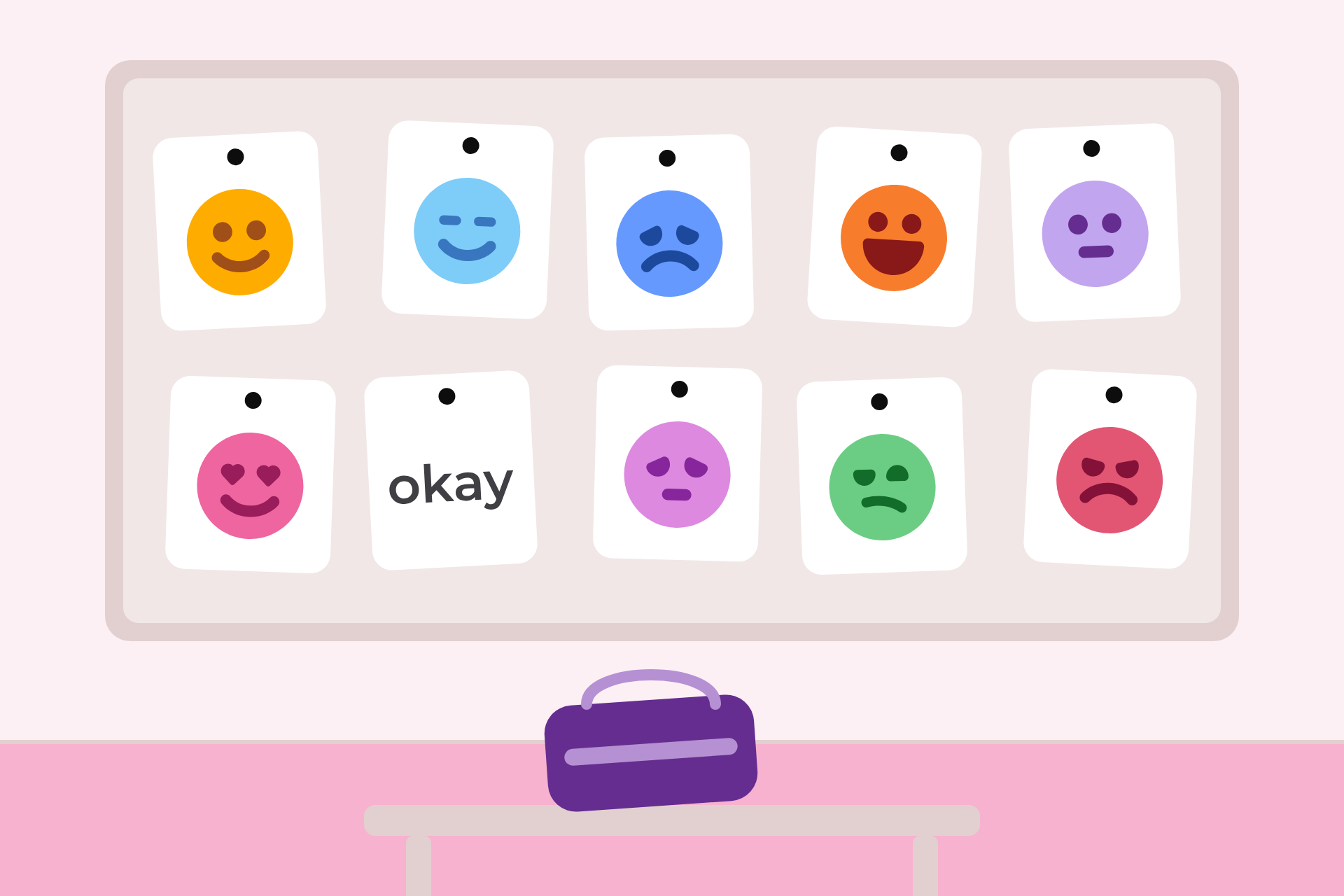




There are two ways technology can know a child: by watching them, or by being told. Much school software watches. Students who feel watched tend to go quiet. YouHue is built on the second way. A child chooses what to share, with a teacher they trust. We call it knowing by invitation, and every decision below follows from it.
Our commitments, in one place
We collect only what we need to provide YouHue. We show no ads, ever. We never sell school data. The school owns its data, and we act only on the school's instructions. And the teacher always decides: no decision about a child is made by software alone.
What we collect, and why
For each student: their name, in the form the school chooses (first and last name, first name and last initial, or initials); their class and year group; their check-ins, meaning the mood they chose, any tags, any words they wrote, and when; and, if the school uses Google sign-in, their school email address. If the school uses family questionnaires, we hold the answers families give. YouHue also produces notes from check-ins, such as themes and alerts, so that teachers can act on them. That is the working set, and we collect only what we need to provide YouHue. Our public website collects standard visitor data, which is separate from school data and listed in our privacy policy.
Who sees what
A student's check-in is private. It is seen by their educators and by the school staff responsible for supporting them, and never by other students. Nothing in YouHue watches a child: when a pattern in what a child has chosen to share is worth a closer look, YouHue asks the teacher, and the teacher decides. Safety alerts go to the school's designated staff, who decide what to do, and the school's own safeguarding process leads. Inside YouHue, access to school data is limited to the staff who need it, behind two-factor sign-in, and every access is logged.
How our AI handles what schools share
Everything YouHue sends to our AI provider is covered by zero data retention and is not used to train its models. Account details, like students' names, are replaced with a code before the AI sees anything. What a student writes is sent as written, and the AI is never allowed to write a name back. We never train or fine-tune AI models on a school's data, including how the product is used. We improve how our AI works by refining its instructions, guided by feedback from schools, teachers and students, and by reviewing missed or mistaken alerts. The AI never diagnoses and never decides. School staff do.
Where it lives, and for how long
School data is hosted with Amazon Web Services in the United States, encrypted in transit and at rest. We keep it while the school's account is active, so a child's picture carries over from one year to the next. Accounts with no activity for 12 months are deleted. We delete school data within 48 hours of confirming a school's deletion request. When a school leaves, we return its data if it wants it, then delete it within 30 days after the service ends, and confirm that in writing on request. Backup copies are deleted when they expire under our normal backup cycle and aren't used in the meantime. We tell schools in advance before hosting moves to another country.
If something goes wrong
If a breach affects a school's data, we tell the school within 48 hours of becoming aware of it: what happened, who and what was affected, the likely consequences, and what we are doing about it. We help the school meet its own duties, and we notify regulators where the law requires.
Compliance
YouHue is the school's data processor. The school stays the controller and the owner of its data. We follow the privacy laws that apply where our schools are, including the UK GDPR and Data Protection Act 2018, the EU GDPR, Australia's Privacy Act, New Zealand's Privacy Act, and US student-privacy law including COPPA and FERPA. Students use YouHue only through their school, and we never show advertising to students.
Working with your data protection officer
We expect the DPIA conversation and we make it easy: a standard data processing agreement, our subprocessor list, our retention schedule, and a technical overview written for ICT staff and DPOs. We review school-issued agreements on request. Questions go to privacy@youhue.com and are answered by a person, not a portal.
The hardest question you have
The easiest way to judge our privacy posture is to ask us the hardest question you have: privacy@youhue.com. Our full privacy policy is at youhue.com/privacy, and the plain-language pack and the technical overview are in our resources.