The new YouHue is coming to schools soon, with more arriving through the year. Talk to our team to see it first.

See what one minute makes possible.

Watch how YouHue works

It starts with one honest answer.

They pick a face, find the right word, add their own words if they want, and get something back of their own.

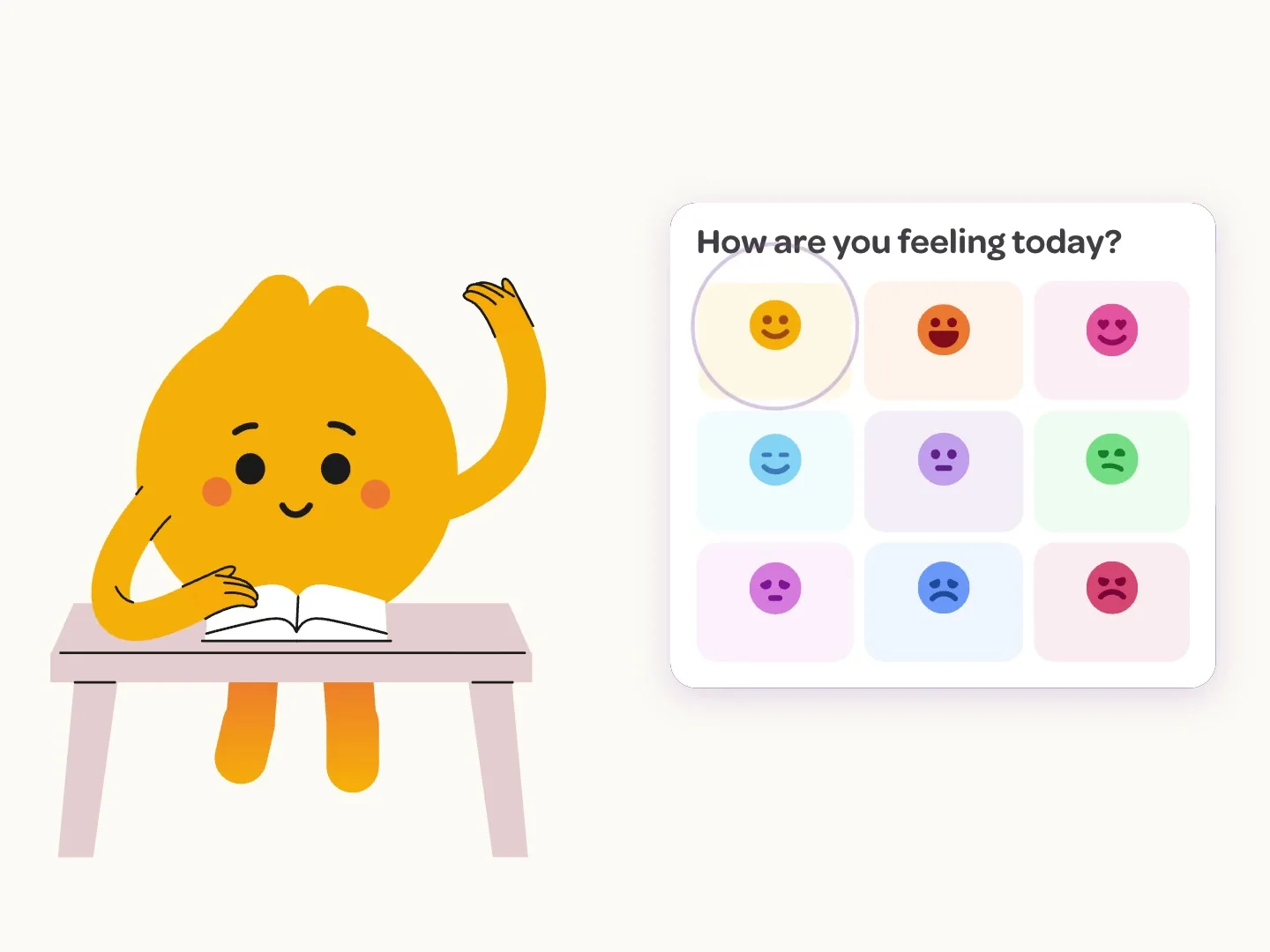
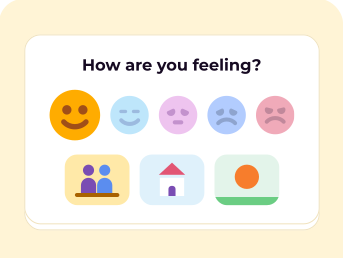
Example of the student check-in: How are you feeling today? with mood faces to choose from
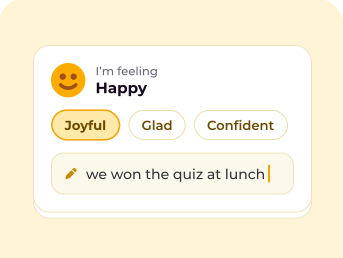
  • Example: Happy is chosen, then the feeling word Joyful, then the student’s own words

    Find the word

    Nine moods, each with five feeling words. Then a few words of their own, if they want.

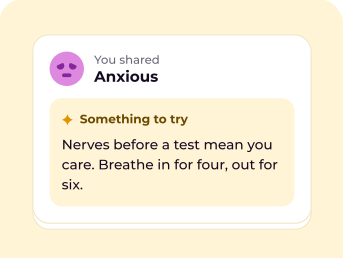
  • Example: after sharing Anxious, the student gets something to try

    Get something back

    A kind word or an idea to try, fitted to what they shared.

  • Example: five faces to choose from, then picture reasons

    Younger classes

    Five faces, then a picture reason if they want one. There’s nothing to type.

Your class, as it arrives.

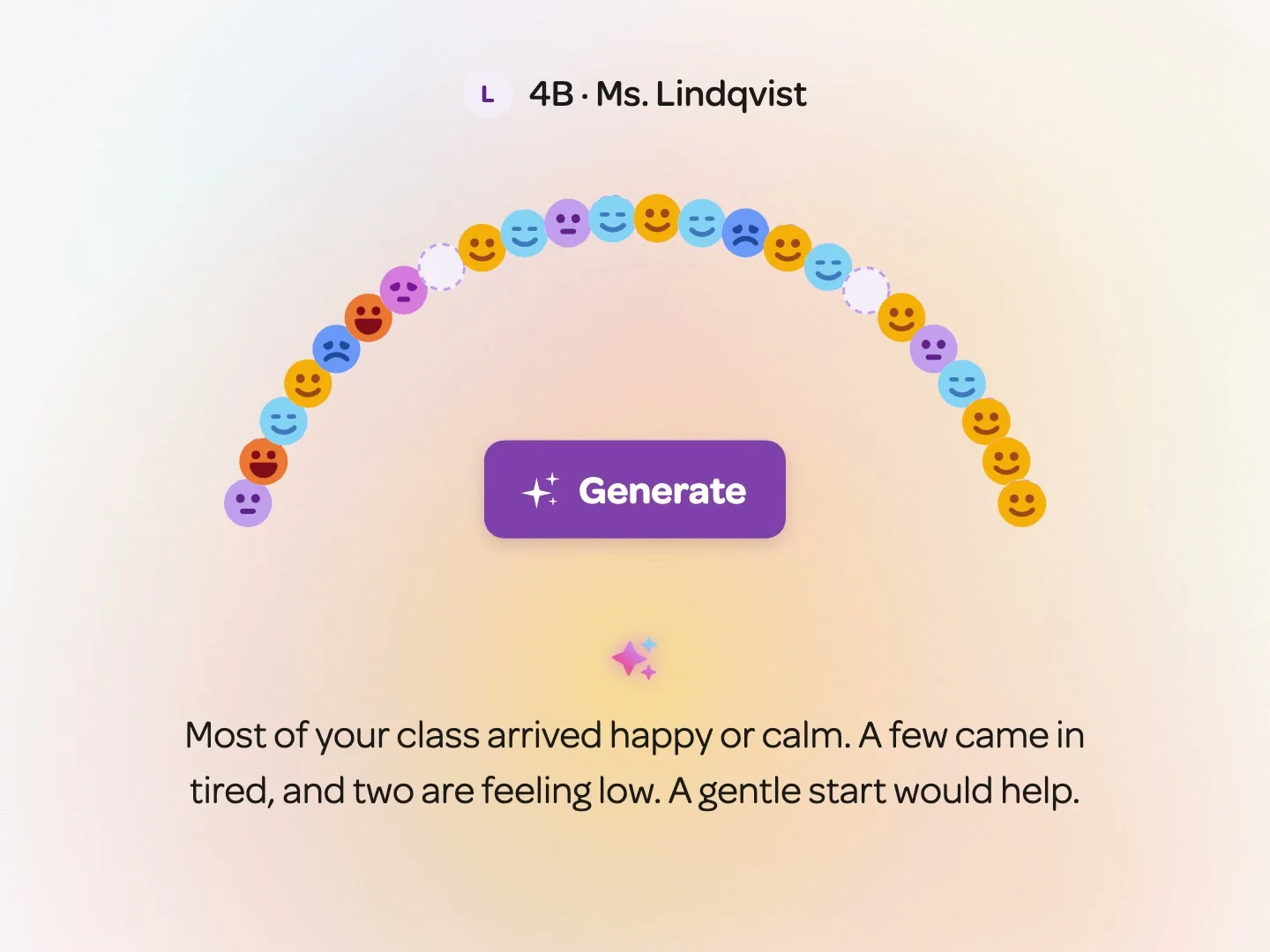
Faces at a glance, then each child’s words. The check-ins that need you first are at the top.

Example class view: each child’s check-in as a face in an arc, with a short summary of how the class arrived
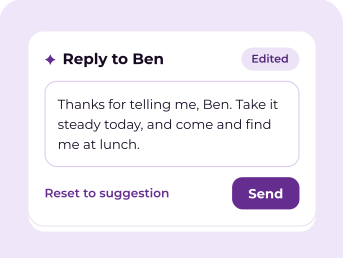
  • Example: a suggested reply to Ben that the teacher has edited before sending

    A draft to make your own

    Start from a suggested reply and change it. Not every check-in needs one.

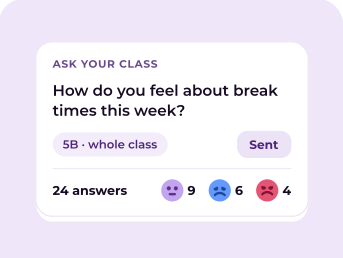
  • Example: a question sent to the whole class, with the answers counted by mood

    Ask the whole class

    Ask everyone about one moment, like falling-outs at break, and read every answer.

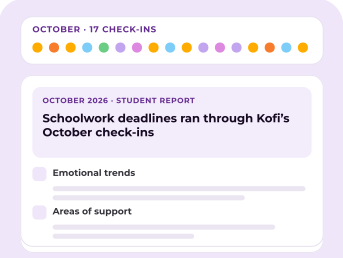
  • Example: a month of one child’s check-ins as mood dots, and the start of their report

    Each child’s story

    Every check-in adds to a picture of each child over time.

    See an example report

One view of your whole school.

Built from the check-ins your classes already do. Nothing extra for staff to collect.

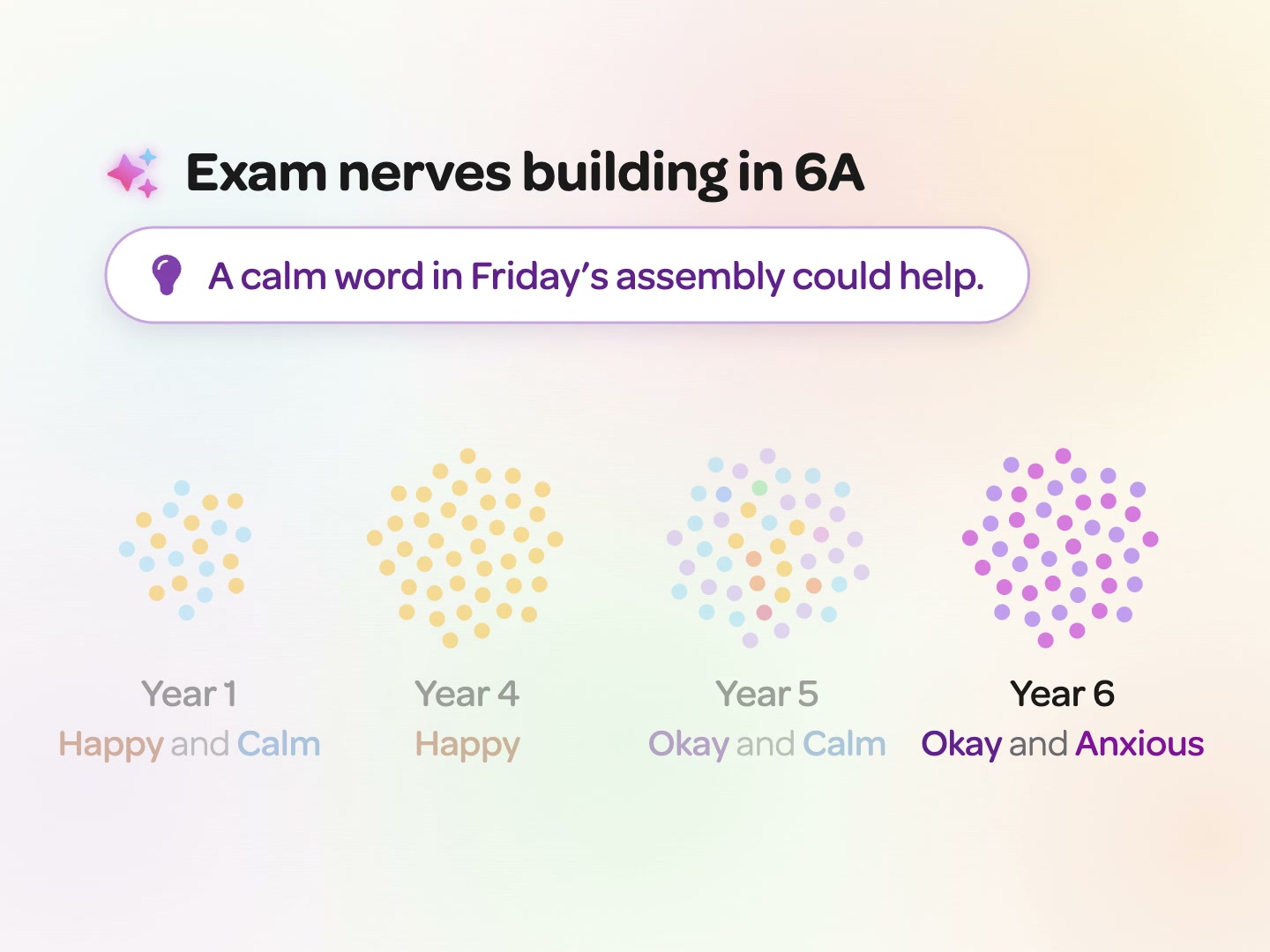
Example school view: how each year group is feeling, with a suggestion for the week
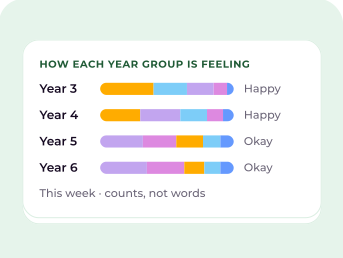
  • Example: how each year group is feeling this week, shown as counts

    See what students are sharing

    How each year group is feeling across the school, in counts, not children’s words.

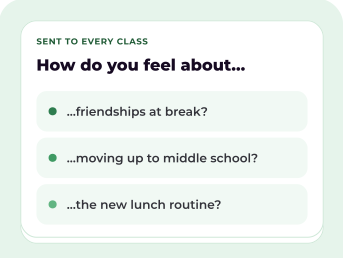
  • Example: one question sent to every class

    One question, every class

    Send one question across the school and read the answers class by class.

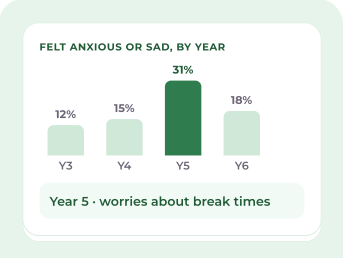
  • Example: the share of students who felt anxious or sad, by year

    Decide where support goes

    Bring the picture to your team and plan what comes next.

When a child needs an adult.

Sometimes it is one check-in. Sometimes it is a pattern over weeks. Either way, an adult decides what happens next.

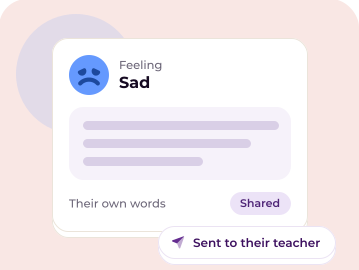
  1. Example: a student’s check-in, Sad with their own words, marked Shared and sent to their teacher

    A student shares something that needs an adult.

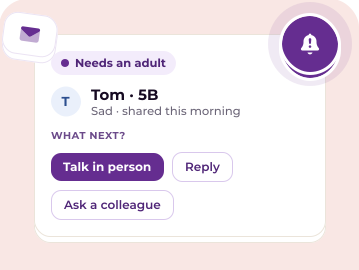
  2. Example: the teacher sees Needs an adult for Tom and chooses what to do next

    Their teacher is alerted and decides what to do.

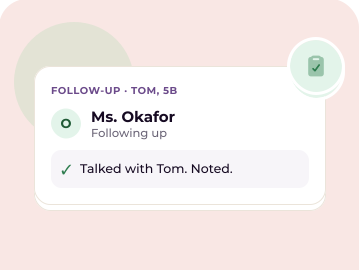
  3. Example: a follow-up for Tom by Ms. Okafor, noted as done

    The school chooses who follows up, and what was done is noted.

Something ready to do about it.

Activities on what students bring up. Run one with the whole class, or send it to one student.

Practice for the moments that feel big.

  • Friendships
  • School stress
  • Family life
  • Emotional regulation
  • Healthy habits
  • 2 minWeather Inside Me
  • When a Friend Says No
  • Reset in Sixty Seconds
  • Before the Test
  • Five-Finger Breathing
  • Making Room at the Table
  • Morning Stretch
  • A New Baby at Home
  • Proud of Me
  • Kind Words Chain

How we protect your school’s data.

Read our privacy policy
  • We follow COPPA, FERPA and GDPR, and act as your school’s data processor.

  • A child’s check-ins go to the educators on their class and admins you permit.

  • Student data is never sold and never used for advertising.

  • Everything YouHue sends to our AI provider is covered by zero data retention and is not used to train its models.

Read our privacy policy

The research that shaped our thinking.

More on the research page
  • 40 studies · 33,700 students

    On achievement

    Universal social-emotional learning is associated with modestly better test scores and grades, in literacy and in maths.

    Read the paper · Review of Educational Research, 2025

    We made checking in a daily habit.

  • 424 studies · 575,000 students · 53 countries

    On school climate

    Universal social-emotional learning is associated with stronger social and emotional skills, better peer relationships, and better school climate and safety.

    Read the paper · Child Development, 2023

    Every student checks in, not just a few.

  • Young people

    On naming feelings

    Greater emotional awareness is linked with fewer depression and anxiety symptoms in young people.

    Read the paper · Journal of Youth and Adolescence, 2017

    Students name a feeling every day.

  • 99 studies

    On the teacher relationship

    Positive teacher–student relationships were linked with greater engagement in school and, less strongly, with achievement.

    Read the paper · Review of Educational Research, 2011

    A child’s check-in goes to their own teacher.

These studies looked at children and schools in general, not at YouHue.

General research on children and schools, not studies of YouHue.

Hear it from the schools that use it.

Explore school stories

See it with your own school in mind.

Talk to our team, or take the two-minute tour yourself.